Updated: May 2026
Bali Diving Packages — Tulamben vs Amed vs Padangbai — Which B…
Bali Diving Packages is a curated Indonesia luxury tourism experience offered by Bali Diving Packages Atelier: handpicked routes, vetted operators, transparent pricing, and 24/7 concierge support across Indonesia.
- What makes Bali Diving Packages a premium experience.
- How Bali Diving Packages Atelier curates exclusive access and concierge logistics.
- Routes, seasons, and pricing transparency — no hidden fees.
Tulamben vs Amed vs Padangbai — Which Bali Dive Spot Should You Pick? (2026)
Apples-to-apples comparison framework across Bali’s three flagship dive zones — wreck dives, macro photography, drift current, certification suitability, and seasonal weather windows.
The Three Anchor Sites of Bali’s Dive Corridor
Most divers planning a Bali trip face the same opening question: which of the three north-coast and east-coast dive zones — Tulamben, Amed, Padangbai — should anchor the itinerary? The honest answer is that they are not interchangeable. Each zone has a defining underwater feature, a defining seasonal window, and a defining diver profile it serves best. This page provides the comparison framework the atelier uses internally when matching a guest to a site. We rank the three zones across seven criteria — flagship attraction, certification suitability, macro versus pelagic, current and skill level, water temperature, accommodation density, and transfer time from south Bali — so you can pick on data instead of marketing copy.
Criterion 1 — Flagship Attraction
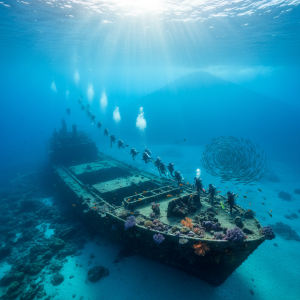
Tulamben’s flagship is the USS Liberty wreck. The 120-metre US Army cargo ship sits parallel to the beach in 5 to 30 metres of water, accessible via a thirty-metre shore swim. The wreck is one of the world’s most accessible large-vessel wrecks and one of the most photographed in Asia. Amed’s flagship is the Japanese wreck plus the macro reefs at Jemeluk Bay and Bunutan. The Japanese wreck is smaller (approximately 25 metres long) but the macro density on the surrounding volcanic black sand is exceptional — ribbon eels, harlequin shrimp, ghost pipefish, leaf scorpionfish, and frogfish are routinely spotted. Padangbai’s flagship is the Blue Lagoon and Jepun reef system — a sheltered bay with vibrant hard and soft coral cover, schools of bumphead parrotfish, and a high probability of cuttlefish and reef shark sightings.
Criterion 2 — Certification Suitability
Tulamben is excellent for Open Water beginners because the Liberty wreck is shallow on its southern end (5 metres at the bow) and the shore entry has minimal current. The drop-off behind the wreck is more advanced (30+ metre dives, occasional thermocline). Amed is the most beginner-friendly of the three — calm shore entries, low current, shallow reefs, and a high concentration of dive shops running entry-level certification courses. Padangbai sits between the two: the Blue Lagoon is fine for Open Water divers but the surrounding boat-only sites (Tanjung Sari, Mimpang, Tepekong) hit Advanced Open Water territory with current, depth, and occasional pelagic encounters that beginners should not attempt.
Criterion 3 — Macro Versus Wide-Angle Photography
Amed wins macro hands down. The volcanic black sand at Jemeluk and Bunutan supports the highest density of small critters in Bali — ribbon eels in three colour phases, harlequin shrimp pairs, ghost pipefish, leaf scorpionfish, frogfish in multiple sizes, mantis shrimp, and the occasional rhinopias. If you arrive with a 60mm or 100mm macro lens, base in Amed. Tulamben is more wide-angle territory — the wreck demands a 16-35mm or 8-15mm fisheye to capture the full structure and the schools of jacks and barracuda that swirl around the bow. Padangbai is mixed — the reef wide-angle is excellent at Blue Lagoon, but the macro on the boat-only sites can also be productive, particularly for nudibranch hunters.
Criterion 4 — Current and Skill Level
Padangbai has the strongest currents of the three zones. The boat sites at Mimpang and Tepekong sit in the Lombok Strait current spine and routinely produce two-knot drift conditions that intermediate divers find exhilarating but beginners find dangerous. Tulamben currents are mostly mild — the wreck site is sheltered by the headland and current rarely exceeds half a knot. The drop-off can have stronger current at depth but it is manageable for Advanced Open Water divers. Amed has the gentlest current overall — most shore dives are effectively current-free, and the boat sites along Bunutan still rarely exceed one knot. If you are training a new diver, Amed; if you are intermediate seeking drift, Padangbai; Tulamben sits in between.
Criterion 5 — Water Temperature and Thermocline
All three sites are warm by global standards but they have meaningful internal variation. Tulamben surface temperatures run 27-29°C year-round, but the drop-off behind the wreck hits a thermocline at 25-28 metres where temperatures drop to 22-24°C — a 5mm wetsuit is recommended for divers who feel cold easily, especially during the August-September upwelling. Amed surface runs 28-30°C with a less pronounced thermocline. Padangbai surface runs 27-29°C, and the boat sites in deeper water can occasionally drop to 23°C during peak upwelling. The atelier provides 5mm wetsuits as a default for the 5-day and 7-day packages because the thermocline catches first-time visitors off-guard.
Criterion 6 — Accommodation Density and Quality
Tulamben has fifteen-plus dive resorts ranging from US$45-per-night village guesthouses to US$280-per-night beachfront luxury properties with sea-view rooms, on-site dive centres, and shoreline restaurants. Amed has thirty-plus accommodations across a longer coastal strip — many smaller and more boutique, several with infinity pools facing Mount Agung, and a handful of dedicated dive resorts with on-site instructor teams. Padangbai has the smallest accommodation density of the three — perhaps eight to ten viable dive-friendly properties — because the village functions primarily as a ferry port to Lombok and the dive market sits secondary. For honeymoon-grade accommodation, Tulamben and Amed lead; for backpacker-friendly options, Padangbai is the cheapest.
Criterion 7 — Transfer Time From South Bali
Tulamben sits roughly three hours by car from Seminyak, Canggu, or Sanur in normal traffic. Amed adds another forty minutes past Tulamben, totalling three hours forty minutes from south Bali. Padangbai is the closest of the three — ninety minutes from Sanur, two hours from Seminyak. If your trip starts and ends in south Bali and you have only 24 to 48 hours of dive time, Padangbai is the obvious choice because the transfer overhead does not eat half the trip. If you have four or more dive days, the longer Tulamben-Amed transfer is more than justified by the underwater payoff.
Comparison Matrix Summary
Tulamben wins on flagship wreck access, intermediate-friendly diving, and accommodation quality. Amed wins on macro photography, beginner suitability, and pristine reef condition. Padangbai wins on transfer convenience and current-drift conditions for intermediate divers. The 5-day curated package combines all three because each contributes something the others do not. The 3-day sampler package picks Tulamben plus Padangbai because the wreck-and-reef combination covers the broadest skill range. The 7-day connoisseur package adds Nusa Penida to the trio, but the fourth site is a different category — pelagic open-water diving — and we treat it as a finale rather than a baseline anchor.
Which Site to Pick If You Can Only Choose One
If you are a beginner with one to two days, Amed. If you are intermediate with two to three days and want the wreck experience, Tulamben. If you are intermediate-to-advanced with one to two days starting from south Bali, Padangbai. If you have four or more days, do not pick one — combine all three through the 5-day or 7-day curated package. The atelier curated model exists precisely to remove the false dichotomy of having to pick. We sequence Tulamben, Amed, and Padangbai across a single trip with the right shop, the right accommodation, and the right transfer logistics for each.
Beyond Tulamben, Amed, and Padangbai — When Nusa Penida Belongs in the Itinerary
Nusa Penida is not interchangeable with the three north-coast sites. It is a different dive product entirely — fast-boat day trips or liveaboard nights focused on pelagic encounters at Manta Point, Crystal Bay, and Blue Corner. We treat Penida as the natural extension of the 5-day package into the 7-day package because divers who have done Tulamben-Amed-Padangbai are typically ready for the higher-current Penida environment. We document the Penida product in detail on our Nusa Penida manta diving guide and we cover the cost difference on our 2026 cost breakdown.
Reserve Your Multi-Site Bali Diving Package
The atelier curated model removes site-selection paralysis. You tell us your dive days, certification level, photography focus, and transfer preferences, and we sequence the right combination of Tulamben, Amed, Padangbai, and Penida nights. Most guests who reach this comparison page end up booking the 5-day or 7-day variant rather than picking a single site. Read our flagship master page, message WhatsApp +62 811 2859 0000, or email [email protected]. The provincial tourism authority publishes updated dive-zone safety bulletins at baliprovinsi.go.id.
Plan Your Multi-Site Bali Diving Trip on WhatsApp