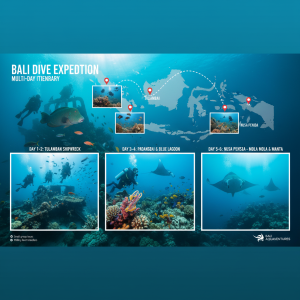
Updated: May 2026
Is Diving with Manta Rays in Bali Safe for Tourists?
Yes, diving with manta rays in Bali is exceptionally safe for tourists when conducted through reputable, certified dive operators. The perceived risk is minimal due to the inherent nature of the animals and the structured protocols in place.
- Manta rays are gentle filter-feeders that possess no stinger, barb, or teeth capable of harming humans.
- Safety is contingent upon operator professionalism, adherence to a strict “no-touch” code of conduct, and thorough dive briefings.
- The primary risks are environmental, such as strong currents at sites like Manta Point, which require a competent diver and an expert guide.
The water shifts from sapphire to a deep, resonant indigo as you descend. Bubbles cascade past your mask, the only sound a rhythmic, meditative hiss from your regulator. Then, a shadow eclipses the sun. It is not a cloud, but a living creature of impossible grace. A giant reef manta ray, its five-meter wingspan articulating with the slow, deliberate power of a primeval bird, glides effortlessly toward you. It is a moment of pure, unadulterated awe. This is the ballet of Nusa Penida’s Manta Point. For the discerning traveler, however, beyond the sheer spectacle lies a critical question: in an encounter with such immense wildlife, is diving with manta rays in Bali safe?
Understanding the Gentle Giants: The Biology of Manta Ray Safety
The most immediate concern for many divers comes from a simple case of mistaken identity. Manta rays are often conflated with their distant cousins, the stingrays. Let’s be unequivocal: manta rays (part of the *Mobula* genus) are completely harmless to humans. They lack the venomous caudal barb, or “stinger,” on their tail that gives the stingray its name and reputation. A manta’s tail is a simple, whip-like appendage devoid of any defensive weapon. Their immense size, with reef mantas (*Mobula alfredi*) in Bali regularly reaching 3 to 4 meters in width, is a tool for efficient movement, not aggression. They are the placid leviathans of the reef, possessing one of the largest brain-to-body mass ratios of any cold-blooded fish, a trait researchers believe correlates with their complex social behaviors and evident curiosity.
Their feeding mechanism further underscores their benign nature. Mantas are filter-feeders, consuming enormous quantities of zooplankton. Their cavernous mouths, which can seem intimidating when wide open, are designed not for biting but for funneling plankton-rich water over their gill plates. They pose no threat to a diver. In fact, their behavior is often inquisitive. I recall a conversation with Dr. Andrea Marshall, a leading marine biologist and co-founder of the Marine Megafauna Foundation, who described them as “incredibly intelligent and sentient.” She noted that their curiosity often leads them to investigate divers, sometimes gliding just overhead in a display that is more inquisitive than intimidating. This is not an act of aggression but of intelligent investigation. Their lifespan can exceed 50 years, and their slow reproductive rate—often one pup every two to five years—makes their conservation, and our responsible interaction with them, all the more critical.
The Manta Sanctuaries of Nusa Penida: Prime Locations and Conditions
The epicenter of manta encounters in Bali is the small island of Nusa Penida, a 45-minute speedboat ride southeast of the mainland. This limestone-rich island is part of the Lesser Sunda Islands and sits within the Coral Triangle, an area recognized for harboring the highest diversity of marine species on Earth. Two specific sites here are world-renowned: Manta Point and Manta Bay. Manta Point, on the island’s exposed southern coast, is the primary destination. It is not a feeding ground but a “cleaning station,” a specific coral bommie where mantas congregate to have parasites and dead skin removed by smaller reef fish like wrasse and butterflyfish. This symbiotic relationship provides divers with a predictable and reliable location for sightings year-round.
However, the very geology that makes Manta Point attractive to wildlife also presents the primary challenge for divers. The site is exposed to the full force of the Indian Ocean, and conditions can be demanding. Swells can create significant surge, and currents can be strong and unpredictable. Water temperatures here can also plummet unexpectedly to 20-24°C, a significant drop from the typical 28°C Bali standard. This is due to seasonal upwelling from the Indonesian Throughflow, a massive ocean current that funnels water from the Pacific to the Indian Ocean, bringing cold, nutrient-rich water to the surface. While this phenomenon fuels the plankton blooms that support the entire ecosystem, it demands a diver’s full respect and attention. Manta Bay, located in a more sheltered cove, offers a calmer, shallower (5-15 meters) alternative, often used for snorkeling and for divers when conditions at Manta Point are too severe. Discerning travelers exploring curated Nusa Penida dive itineraries will find that premium operators dynamically adjust plans based on these real-time conditions.
The Human Factor: Why Your Dive Operator is the Most Critical Safety Component
The safety of your manta ray dive has less to do with the animals and everything to do with the professionalism of the operation you choose. The difference between a premier, safety-conscious outfitter and a budget-oriented one is stark. The answer to “is diving with mantas in bali safe” is a resounding yes, but only with the right team. A top-tier operator, like those vetted for our bali diving packages, will insist on small groups, typically a maximum of four divers per PADI-certified Divemaster. This ensures individual attention and effective supervision in potentially challenging conditions. Their equipment will be scrupulously maintained by brands like Scubapro or Aqualung, and their boats will be equipped with dual engines, oxygen, and comprehensive first-aid kits.
The pre-dive briefing is the most telling indicator of quality. A cursory, two-minute talk on the boat is a red flag. A proper briefing, as delivered by guides like Wayan Suartika, a veteran instructor with over 5,000 dives around Nusa Penida, will last 15-20 minutes. It will cover not just the dive plan, depth, and time, but also a detailed analysis of the day’s specific currents, entry and exit procedures, and emergency protocols. Crucially, it will dedicate significant time to the Manta Ray Code of Conduct. Wayan explained to me, “The mantas trust us. We come here every day. If we bring divers who chase and scare them, they will leave. My job is to protect the divers from the ocean, and to protect the mantas from the divers.” This ethos of stewardship is the hallmark of a safe and ethical operation. It’s a level of detail and care that may increase the cost of a two-tank dive trip from a budget $95 to a more realistic $175, a premium that directly translates into safety and a higher quality experience.
Codes of Conduct and Conservation: Ensuring Sustainable Encounters
Responsible interaction is the cornerstone of manta dive safety and sustainability. The globally recognized guidelines, heavily promoted by organizations like the Manta Trust, are not just about protecting the animals; they are about ensuring a safe and predictable environment for everyone in the water. The rules are simple and effective. Divers are instructed to maintain a minimum distance of 3 meters from the mantas at all times. You should never swim directly towards a manta or block its path; instead, approach slowly from the side. Chasing a manta is strictly forbidden, as it causes stress and can drive them away from the vital cleaning stations. Touching a manta is the ultimate transgression, as it can remove their protective mucus layer, leaving them vulnerable to infections.
These protocols are enforced by reputable guides and are essential for the long-term health of the manta population. The waters around Nusa Penida were officially designated as a Marine Protected Area (MPA) in 2010, covering over 20,000 hectares. As noted by Indonesia’s Ministry of Tourism on its official travel portal, this designation aims to protect the rich biodiversity, including the manta rays and the rare Mola mola (oceanic sunfish). Choosing an operator who actively participates in and respects these conservation efforts, such as by contributing sighting data to researchers, ensures your tourism dollars support the preservation of the very ecosystem you’ve traveled to see. Our commitment at Bali Diving Packages Atelier is to partner exclusively with operators who demonstrate this deep-seated respect for marine conservation protocols.
Diver Preparedness: Are You Ready for the Manta Dive?
While the operator holds immense responsibility, the diver is the final piece of the safety puzzle. Self-awareness is key. While a certified Open Water diver can technically dive at Manta Point, it is strongly recommended for those with an Advanced Open Water certification or at least 30 logged dives, including experience in currents. Your comfort level in dynamic water is paramount. The primary skill required is excellent buoyancy control. In the presence of surge, the ability to hold your position in the water column without flailing your arms or kicking frantically is non-negotiable. Poor buoyancy not only risks damaging the fragile coral reef but can also lead to dangerously rapid ascents or descents.
Before the dive, be honest with your guide about your experience level, any anxieties, and when your last dive was. A good guide will use this information to place you in the optimal position within the group. Mental preparedness is just as important as physical skill. It is easy to become mesmerized by the mantas—a phenomenon some guides call “manta narcosis”—and lose track of your depth, air consumption, or your buddy. A safe diver remains aware of their surroundings, checks their gauges regularly (every 5-10 minutes), and stays in close contact with their guide. Carrying your own safety equipment, such as a surface marker buoy (SMB), is a standard practice for any experienced diver and is mandatory with any quality operator in these waters. The encounter is a privilege, and arriving prepared is a responsibility.
Quick FAQ: Your Manta Ray Diving Questions Answered
What is the best time of year to see manta rays in Bali?
Manta rays can be seen at Nusa Penida’s cleaning stations year-round. However, the dry season, from April to October, generally offers the best diving conditions with calmer seas and visibility that can exceed 30 meters. The Mola mola season, from July to October, often overlaps, providing a chance to see both iconic species.
Can I snorkel with mantas instead of diving?
Absolutely. Manta Bay is a shallower, more protected site where snorkeling with manta rays is a very popular and accessible activity. While diving at Manta Point often provides a more immersive, eye-level perspective for a longer duration, snorkeling offers a fantastic and less demanding way to witness them feeding near the surface.
Are there any other dangers at these dive sites besides currents?
The primary environmental hazards are current and surge. Other marine life poses virtually no threat. While there may be occasional jellyfish, serious incidents are exceedingly rare. The standard risks of scuba diving, such as decompression sickness, apply, which is why diving with a conservative profile and a reputable operator is essential. As per the biological record, mantas themselves pose no danger.
Why is the water sometimes so cold at Manta Point?
The cold water is caused by a phenomenon called upwelling. Deep, cold, nutrient-rich water from the Indonesian Throughflow is pushed up to the surface around the Nusa Islands. While it can be a shock to divers, this cold water is the reason the ecosystem is so rich in plankton, which is the primary food source for manta rays, making it a necessary ingredient for these incredible encounters.
The question of whether diving with manta rays in Bali is safe can be answered with a confident yes, but with a critical caveat. The safety of the encounter is not defined by the gentle nature of the rays, but by the pillars of professional guidance, personal preparedness, and a profound respect for the marine environment. It is an experience that demands diligence in selecting your guides and honesty in assessing your own capabilities. Choosing the right partner for this expedition is paramount. At Bali Diving Packages Atelier, we curate experiences that prioritize not just the spectacle, but the sanctity and safety of every dive. Explore our bespoke bali diving packages to ensure your encounter with these magnificent creatures is as secure as it is unforgettable.